25° Vertical Angle: Understanding the Critical Measure
A 25-degree vertical angle is a commonly used measurement in both art and construction, but what does it actually mean, and how is it calculated? Let's delve into the world of angles and their applications to understand this term better.
Vertical angles, as the name suggests, are angles that are formed on a line perpendicular to a given angle. In geometry, angles are often measured in degrees, and a 25-degree angle is just one interval on the wide spectrum of angular measurements.
The Nature of Vertical Angles
Vertical angles are particularly useful in understanding the relationships between lines and figures in geometry. They play a crucial role in solving problems that involve computations with angles, especially in advanced geometric problems and trigonometry.


Understanding vertical angles is also valuable in practical applications, such as architecture and construction, where precise measurements are vital for structural integrity and aesthetics.
Angle Measurement Tools
To measure a 25-degree vertical angle, you would typically use a protractor or a similar measuring tool. Protractors have degree marks that allow you to measure angles with a high degree of accuracy. To use a protractor to measure a vertical angle:


- Place the center of the protractor at the vertex of the angle.
- Align one of the protractor's straight edges with the side of the angle you're measuring.
- Look at the degree mark where the second side of the angle intersects the inner or outer scale of the protractor. This is your angle's measurement.
Calculating Vertical Angles
If you know one of the vertical angles' measures and need to find the other, you can use the fact that vertical angles are equal. This means that if angle A in a pair of vertical angles is 25 degrees, then its vertical angle, angle B, is also 25 degrees.
However, if you're given the measure of one angle in a pair of vertical angles and need to find the other, but it's not part of a pair, you can still use the information that vertical angles are equal to determine the measure of the unknown angle.
Applications of Vertical Angles
Understanding vertical angles isn't just about equations and measurements. It has real-world applications that can help in various practical scenarios.
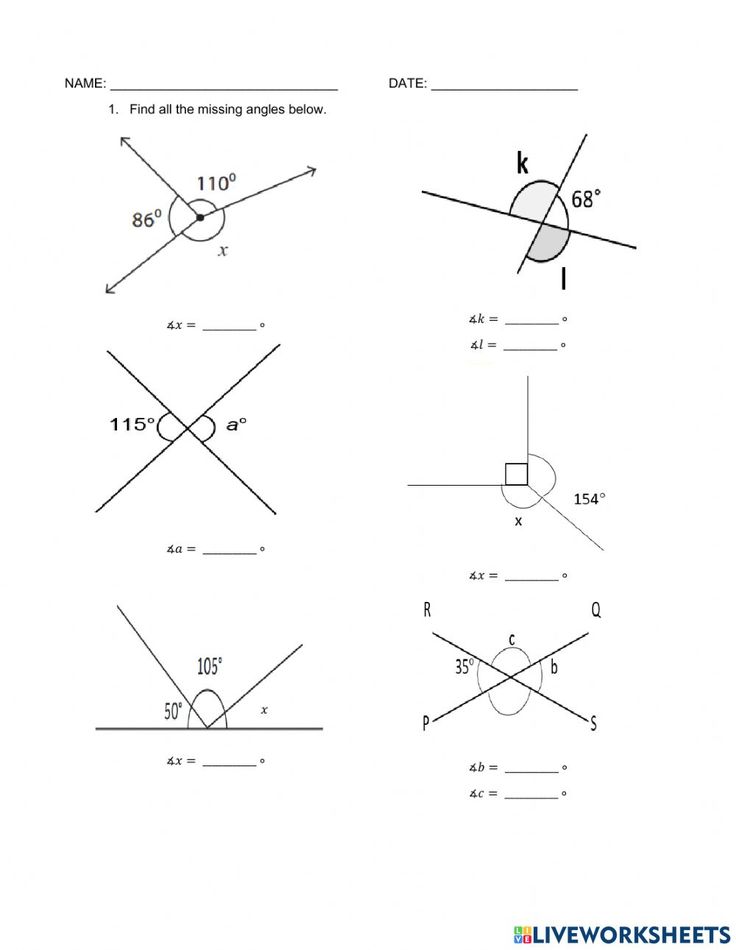


In construction, for instance, knowing the measurements of vertical angles can help ensure that structures are built to precise specifications. A 25-degree angle might be used in the design of a roofline, window placement, or other architectural elements.
Art and Angle Measurement
In art, understanding vertical angles can help in creating proportionate, balanced, and visually pleasing compositions. A 25-degree angle might be used in the design of a painting or a drawing to create a specific mood, perspective, or optical illusion.
In conclusion, a 25-degree vertical angle is a significant concept in geometry that has several applications in fields like architecture, construction, and art. Understanding how to measure and calculate vertical angles is a fundamental skill that can contribute to precision, accuracy, and creativity in various disciplines. As the world continues to evolve, the relevance of vertical angles in our built environment and creative expressions remains as timeless as the principles of geometry that govern them.
Related Articles

Maximizing Performance: The 25° Downward Angle Crafting a catchy and SEO-friendly title can help increase click-through rates and improve search engine visibility. To achieve this, follow a few best practices: * **Include the primary keyword**: In this case, "25° downward angle" was used to ensure relevance to the content and search queries. * **Be clear and descriptive**: The title should immediately convey what the page is about, guiding users and search engines alike. * **Keep it concise**: While it's essential to be clear, you should also strive to keep your title under 60 characters to avoid truncation in search results. * **Use action-oriented language or make it interesting**: Starting with "Maximizing Performance" adds intrigue and encourages users to click, while "The 25° Downward Angle" maintains relevance. * **Consider using numbers and special characters**: In this title, the degree symbol and number were used naturally, which can sometimes improve click-through rates. By following these rules, you'll create titles that attract both users and search engines, driving more traffic to your content.
A downward angle of 25 degrees, in photography and videography, refers to a specific camera orientation that captures images or video with a diagonal angle...

Understanding Acute Angles: What's the Ideal Degree?
In geometry, angles are fundamental concepts that define the relationship between lines. One type of angle is an acute angle, which is less than 90 degrees...

Understanding Acute Angles: What Degree is an Acute Angle?
In the realm of mathematics, particularly trigonometry, understanding the concept of degrees and acute angles is fundamental. Degrees are not just units of...

What is the Measure of Acute Angle in a Triangle
In the realm of geometry, particularly triangles, the question often arises: "What is the degree of an acute angle triangle?" Let's dive into this intriguing...

180 Degrees: Calculating the Vertical Angle
The term 'angle' in geometry is a measure of the rotation of one vector from another. It's typically measured in degrees, with 360 degrees representing a full...

Understanding Acute Angles: What is an Acute Angle in a Right Triangle?
The acute angle in a right triangle is a concept that's crucial to understand in trigonometry and geometry. It's one of the three angles in a right triangle...