APA Research Paper Outline Sample: Perfect Your Format
A well-structured research paper is vital for effective communication of your ideas and findings. The American Psychological Association (APA) outline format is a popular choice among social sciences, which provides a clear and organized way to present academic papers. Let's delve into the APA outline format, using a research paper sample to illustrate its key components.
The APA format requires a specific structure for your paper, ensuring consistency and readability. Here's a breakdown of the APA outline format, using a hypothetical research paper on the impact of mindfulness meditation on students' academic performance:
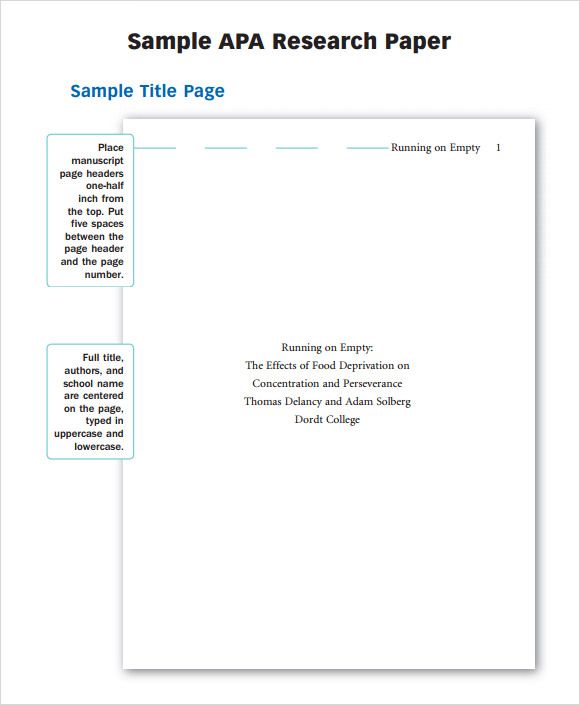
Title Page
Your title page should include the paper's title, your name, and your institution. It should be centered and typed in a 12-point, Times New Roman font, with one-inch margins on all sides. Here's a sample:


Title: The Impact of Mindfulness Meditation on Students' Academic Performance
John Doe
Department of Psychology
University of Anytown
Abstract
The abstract is a concise summary of your entire paper. It should be a single paragraph (150-200 words) that states the research problem, the participants, the methods, the results, and the major implications of your findings. Here's a sample abstract:


The present study investigates the effect of mindfulness meditation on students' academic performance. Participants were 100 university students who were randomly assigned to either an experimental group (meditation training) or a control group (waitlist). Results indicated that students in the meditation group experienced improved academic performance compared to the control group, suggesting that mindfulness meditation may be a effective tool for enhancing students' cognitive functioning and overall academic success.
Introduction
The introduction introduces your topic, provides background information, and presents your research problem. It should clearly state the purpose of your study and what you hope to achieve. Here's a sample:
Academic performance is a complex phenomenon influenced by a multitude of factors. One such factor that has garnered increasing attention is mindfulness meditation (Segal, Williams, & Teasdale, 2002). Mindfulness is the non-judgmental awareness of one's thoughts, feelings, and surroundings (Kabat-Zinn, 1990). Previous research has suggested that mindfulness training can improve cognitive functioning and reduce symptoms of stress and anxiety (Gu, Goldin, & Gross, 2015). However, the impact of mindfulness meditation on students' academic performance remains relatively unexplored. The present study aimed to fill this gap by examining whether mindfulness meditation could enhance students' academic performance.




Method
The method section describes the participants, materials, and procedures used in your study. It should be detailed enough for others to replicate your study. Here's a sample:
Participants
Participants were 100 university students (64 females, 36 males) aged 18-25 (M = 20.5, SD = 2.1) who were randomly assigned to either the experimental group (n = 50) or the control group (n = 50).
Materials
Participants in the experimental group received a guided mindfulness meditation training program, which consisted of five 20-minute meditation sessions per week for four weeks. The control group did not receive any intervention and was placed on a waitlist.
Procedure
Participants completed a academic performance task, the Cognitive Failures Questionnaire (Broadbent, Cooper, FitzGerald, & Parkes, 1982), and the Mindful Attention Awareness Scale (Brown & Ryan, 2003) prior to and after the four-week intervention.
Results
The results section presents the data collected in your study. Use tables, figures, and text to clearly display your findings. Here's a sample:
Academic Performance
A two-way repeated-measures ANOVA indicated a significant interaction effect between time (pre-post) and group (meditation vs. control) on academic performance, F(1, 98) = 6.45, p = .013, η² = .062. Simple main effects analyses revealed that the meditation group significantly improved in academic performance from pre- to post-intervention, t(49) = -2.85, p = .007, d = -0.52, while the control group showed no significant improvement, t(49) = -1.23, p = .23.
Discussion
The discussion section interprets your results, compares them to previous research, and offers implications and limitations of your study. Here's a sample:
Interpretation of Results
The findings of the present study indicate that mindfulness meditation can improve students' academic performance. This is consistent with previous research showing that mindfulness training enhances cognitive functioning (Gu et al., 2015) and reduces stress and anxiety (Hofmann, Sawyer, Witt, & Oh, 2012). It is possible that the improvements in academic performance were due to the increased working memory capacity and attentional control that have been shown to result from mindfulness training (Gu et al., 2015).
Upon completing your research paper, it's crucial to proofread, revise, and format your paper according to APA guidelines. This involves ensuring consistency in headings, using 12-point font, doubling spacing, and including a running head.
Related Articles

Mastering Research: A Sample Outline for Your Paper
Crafting a research paper is a meticulous task that involves thorough exploration of a topic, critical thinking, and engaging writing. A well-structured...
Mastering APA: Essential Outlines for Your Research Paper
Crafting a well-structured research paper in APA format is a pivotal step in academic writing. Not only does it demonstrate your understanding of the topic...

University of Mindanao Research Paper Format Guide
The University of Mindanao, a leading institution in Davao City, Philippines, has established specific guidelines for formatting research papers to ensure...

Letter Size Paper in Pixels: Perfect Dimensions for Your Designs
In the digital world, we often need to translate physical sizes into pixels, the standard unit of measurement for on-screen display. Letter size paper, a...

Sample Wedding Reception Seating Chart: Plan Your Perfect Wedding Setup
Creating the perfect atmosphere at your wedding reception begins with thoughtful planning, and one crucial element is the design of your seating chart. A...

"IEEE Research Paper Presentation Template: Engage Your Audience"
Embarking on the journey of presenting your IEEE research paper, you'll find that having a well-structured and visually appealing template can significantly...