Beginner-Friendly Caricature Drawing Tutorials: Learn to Draw Fun Cartoons
Welcome, aspiring artists, to this comprehensive guide on caricature drawing! Whether you're new to drawing or looking to expand your skills, this tutorial is designed to help you master the art of caricature drawing. By the end of this lesson, you'll be able to create captivating, exaggerated portraits that capture the essence of your subject and bring joy to viewers.
Caricatures are all about exaggeration and compiling the most distinctive features of a person into a single, humorous portrait. Think of famous caricaturists like Al Hirschfeld or limestone sculptorAuguste Rodin. Their artwork isn't about detail; it's about capturing the spirit of their subjects. Ready to give it a try? Let's dive in!
Understanding Caricatures: Style and Exaggeration
Before you start drawing, it's crucial to understand the basics of caricatures. Caricatures aren't a realistic depiction of a person; they're an exaggerated interpretation. This exaggeration can come in various forms, from facial features to body proportions.


Caricatures can be stylized in many ways. Some artists prefer a realistic approach, while others opt for a more cartoonish or abstract style. The important thing is to find your unique style and run with it. Remember, there are no rules in caricature drawing – only creative freedom!
The Art of Exaggeration
Exaggeration is the heart and soul of caricature drawing. To excel in this craft, you must learn to identify and amplify the most distinctive traits of your subject. This could be anything from an unusually long nose to an extraordinarily large forehead. The key is to find those standout features and blow them out of proportion.


But be careful not to exaggerate every feature. The goal is to create a recognizable portrait, not a comical mess. Aim for three to five exaggerated features per sketch. Any more than that, and your subject might become unrecognizable. Less is often more in this case.
Studying Your Subject
Before you start drawing, observe your subject. Really look at their face – the shape of their head, the size and shape of their eyes, the length and curve of their nose, the fullness of their lips. Make mental notes of their most distinctive features. The more you study, the easier it will be to exaggerate those features in your drawing.
A helpful tip is to sketch your subject quickly and loosely, focusing on capturing their likeness rather than details. Once you're satisfied with your initial sketch, you can begin to exaggerate the most distinctive features. Don't be afraid to push your exaggerations to the extreme – remember, you can always dial them back a bit if needed.



Mastering Caricature Techniques: Tools and Tips
Now that you understand the basics of caricature drawing, let's discuss the tools and techniques to help you create your best work.
As a beginner, you'll want to start with simple, inexpensive tools. A basic pencil set, sketchbook, and eraser are all you need to get started. As your skills improve, you can explore other mediums like charcoal, ink, or digital drawing.
Drawing Techniques for Caricatures
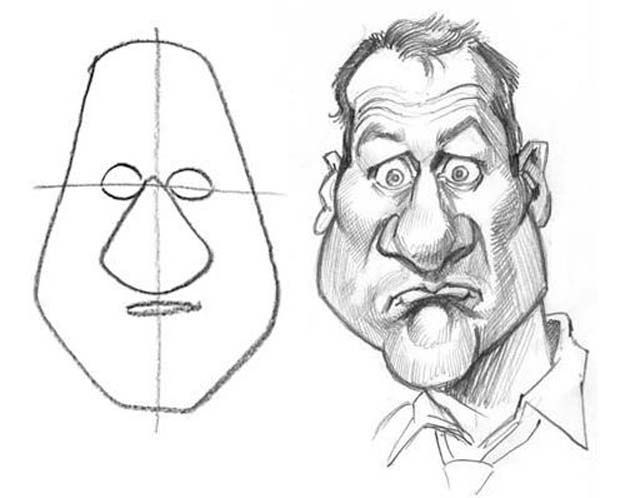
When drawing your subject, start with basic shapes and gradually build up details. This progressive approach allows you to maintain proper proportion and perspective. Begin with a simple oval or circle for the head. Next, add guidelines for eye level, brow line, nose line, and chin. Finally, sketch in your subject's features, gradually refining your lines until you're satisfied with the likeness.

Once you're happy with your initial sketch, it's time to exaggerate. Begin with the most distinctive features and slowly amplify them. As you exaggerate, step back frequently to ensure your portrait remains recognizable. Remember, the goal is to capture the spirit of your subject, not destroy their likeness.
Tips for Achieving Exceptional Results
Practice, practice, practice – the more you draw, the better you'll become. Don't be afraid to fill entire sketchbooks with your work. Each drawing is an opportunity to learn and improve.
Seek feedback – share your work with others and ask for their input. You might be surprised at what you can learn from constructive criticism. Additionally, studying other artists' work can provide immense inspiration and help you refine your techniques.
Exercising Your Skills: Exercises and Projects
Now that you've mastered the basics of caricature drawing, let's explore some exercises and projects to help you grow as an artist.
One of the best ways to improve your skills is by drawing consistently. Set aside dedicated time each day to sketch – even if it's just for a few minutes. The more you practice, the stronger your skills will become.
Exercise: The Power of Progression
The Power of Progression exercise involves creating a series of sketches that build upon one another. Begin with a simple oval or circle, then gradually build up your drawing with each subsequent sketch. The goal is to maintain proper proportion and perspective as you add details and exaggerate features.
For example, your first sketch might simply consist of an oval with a single line indicating eye level. Your second sketch could add a triangle for a nose and a "+" for the intersecting brow, nose, and chin lines. Continue building up your drawing with each subsequent sketch, gradually refining your lines and adding details. This exercise helps train your eye to maintain proper proportion and perspective, essential skills for caricature drawing.
Project: Caricature Museum
Create a caricature museum in your sketchbook, dedicating a spread to each famous personality you caricature. This project allows you to explore various styles and techniques while honing your skills. Plus, it makes for an impressive portfolio piece when you're finished!
Begin with a simple sketch of your subject, capturing their likeness. Once you're satisfied, begin exaggerating their most distinctive features. Remember to step back frequently to ensure your portrait remains recognizable. Add finishing touches like shading, texture, or digital effects, and display your caricature in your "museum."
Caricature drawing is a lifelong journey of creativity and self-expression. Each sketch is an opportunity to learn, grow, and improve. Embrace your imperfections, and don't be afraid to push your boundaries. Who knows – you might just create something truly extraordinary. So grab your pencil, find your muse, and let the good times draw!
Related Articles

Learn to Draw a Fox Mask: Step-by-Step Tutorial
Immersing yourself in the creative world of costume design often leads to interesting projects like crafting a fox mask. This captivating accessory, inspired...

Learn to Draw Olaf Step by Step: Basic Tutorial
Embarking on the artistic journey of drawing our beloved character, Olaf from Disney's "Frozen," might seem daunting, but with basic steps and a bit of...

Easy FoxMask Drawing Tutorial: Learn to Draw a Fox Mask Step by Step
Embarking on an artistic journey doesn't necessarily mean you need extensive training or expensive materials. A simple fox mask drawing can be a fun and...

Daft Punk Helmet Drawing Tutorial: Learn to Draw Iconic Helmets Step-By-Step
Imagine the iconic duo Daft Punk, known for their groundbreaking electronic music and even more iconic visual style, particularly their signature robot...

Anime Character Names: Learn to Draw with These Step-by-Step Tutorials
The captivating world of anime is enriched by its rich tapestry of diverse character names and intricate drawing styles. These aspects not only drive the...

Easy Cartoons: 10-Year-Olds Learn to Draw Favorite Characters
Unleashing creativity is an exciting journey, especially for kids, and learning how to draw cartoons is a fun and rewarding way to start. If you're a...