Cash Book Vouchers: Simplify Accounting Today
Embarking on a journey to understand accounting thoroughness? More likely than not, you'll stumble upon the term "cash book vouchers". But what exactly are they, and why are they so crucial? Let's delve into the world of cash book vouchers, discovering their purpose, types, and how they help maintain robust financial records.
Cash book vouchers serve as vital documents in the accounting sphere, functioning as a cross-verification tool between accounts and bank statements. They peinently record all money-related transactions - be it receipts, payments, or transfers. By meticulously documenting every transaction, cash book vouchers ensure financial integrity, bolstering the very foundation of accurate accounting.
Evolution and Purpose
The cash book voucher evolution mirrors the advent of modern accounting. dating back to the days when single-entry bookkeeping ruled, the one-column cash book sufficed. But as business complexity grew, so did the need for more sophisticated record-keeping. Double-entry bookkeeping entered the scene, introducing double-column cash books and thus, cash book vouchers as we know them today.


The purpose of a cash book voucher remains starkly clear - it ensures balance. In double-entry bookkeeping, every transaction affects at least two accounts. Cash book vouchers ensure these balances adjust correctly and reflect prevailing financial status.
Cash Book Voucher Types
Cash book vouchers typically fall into two main categories: Receipt Vouchers and Payment Vouchers. Receipt vouchers document income-related transactions - sales, deposits, etc. - while payment vouchers record expenses, like utility bills, loan repayments, and so on.


Additionally, there are journals and ledger folios that also function as cash book vouchers, but possess unique characteristics. Journals, used to record financial transactions initially, branch out into ledger folios as part of the posting process. This ensures smooth flow of financial data across your entire accounting system.
Cash Book Voucher Elements
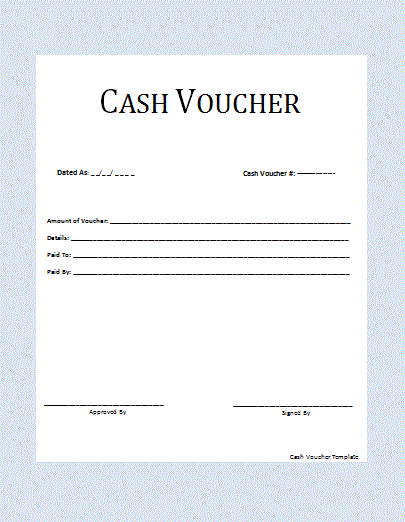
A typical cash book voucher bears several key elements. These include voucher number, date, name and address of the party involved, amount, cheque or receipt number, and bank details, among others. By including such crucial information, cash book vouchers prevent errors and fraud, allowing for prompt reconciliation.
The structured format also permits easy categorization and retrieval, ensuring your accounting processes remain streamlined and efficient.


Cash Book Voucher Maintenance and Verification
Regular upkeep and verification are integral to the effectiveness of cash book vouchers. This process ensures accuracy, offsets errors or discrepancies, and averts financial mismanagement. Logical steps include reconciliatory verification, cross-checking with bank statements, and periodic auditing.
In today's digital age, cloud-based and automated accounting software further simplify these processes, making them quicker and more reliable.
Reconciliation: The Key to Accuracy
Reconciliation serves as a critical step in maintaining cash book voucher accuracy. It's a verification process that compares cash book entries to those in the bank statements. Any disparities uncovered often reveal errors, overlooked transactions, or fraudulent activity, empowering swift corrective action.
Regular reconciliation, ideally monthly or bi-monthly, not only safeguards your cash flow but also ensures reliable financial reports.
As businesses grow, so does their dependence on cash book vouchers. Their importance lies not just in their ability to record financial transactions, but in the clarity and accuracy they bring to your accounting processes. Understanding and harnessing this power can bolster your business foundation, making it more robust and reliable.
Related Articles

Cash Coupon Books: Unlock Savings Today
Ever found yourself rifling through your wallet, only to discover a forgotten $50 bill tucked away behind an old receipt? Imagine applying that same discovery...
Cash Vouchers on Webull: What & How to Use
Ever found yourself eager to dive into the dynamic world of investing but hesitant about the risks involved? Webull, a leading online brokerage platform...

Cash vs Gift Vouchers: Which is Right for You?
When it comes to gifting or rewarding individuals, the terms "cash voucher" and "gift voucher" often pop up in our conversations. However, not many understand...

Cash Book Made Easy
Are you tired of manual cash tracking and want to streamline your accounting? Then, it's time you explored the benefits of using cash book software. Cash Book...

Cash Raffle Tickets: Win Big Today!
änglich Raffle Tickets: A Prime Administrative Fundraiser In the realm of fundraising initiatives, cash raffles have emerged as a popular and effective...

Moneybox Cash ISA: Maximise Your Savings Today
If you're in the UK and looking for a tax-efficient way to save, you might have heard about the Moneybox Cash Lifetime ISA (LISA). It's a cash savings account...