Corporate Minute Template: Streamline Your Business Meetings
In the dynamic world of corporate governance, every minute detail can make or break a decision. Meeting minutes, recorded in minutes templates, are not just a formality; they serve as a legal record of decisions made and actions taken. They help maintain transparency, accountability, and are crucial in case of disputes or future reference. Thus, it's essential to use well-structured, comprehensive, and customizable corporate minute templates.
An effective corporate minute template guides you through the relentless pursuit of productivity, ensuring that you cover all critical aspects withoutmissing any vital information. Here, we delve into the intricacies of corporate minute templates, their importance, key components, and best practices to streamline your meeting minutes process.
Understanding Corporate Minute Templates
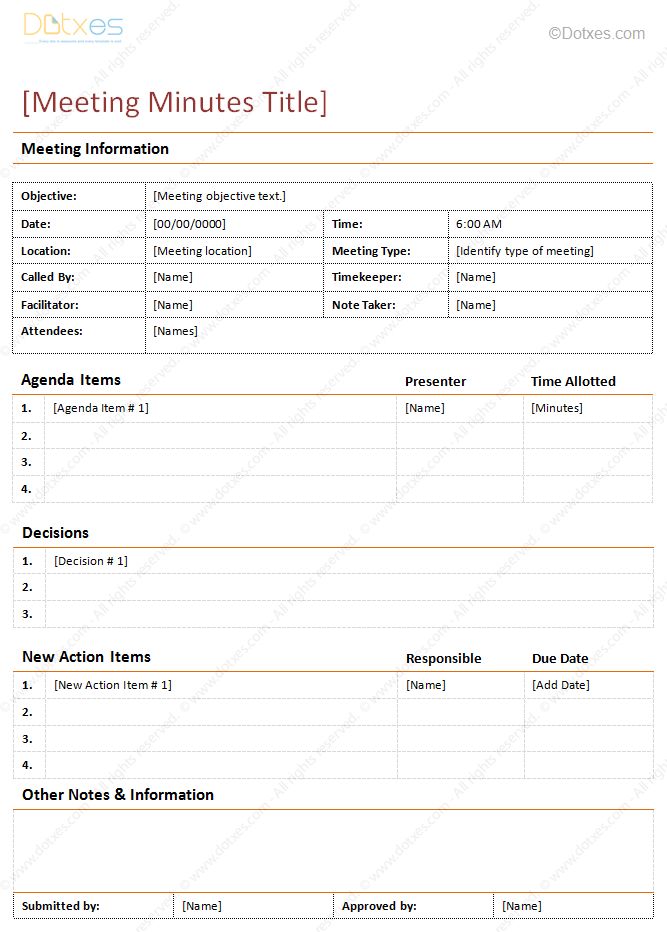
Corporate minute templates are standardized documents that guide the recording of proceedings in corporate meetings, ensuring consistency, accuracy, and completeness. They are tailored to align with the organization's policies, legal requirements, and best practices.


Using a minute template facilitates a smooth meeting-to-minute process, saving time, reducing errors, and maintaining compliance. It ensures that all necessary information is captured, thereby aiding in decision-making, review, and follow-up processes.
Key Components of a Robust Corporate Minute Template
An ideal corporate minute template includes the following elements to capture all crucial aspects of a meeting:


- Meeting Details: Date, time, location, and participants.
- Call to Order: The exact time the meeting started and who called it to order.
- Attendance: A list of attendees, with indicators for those present, absent, or arriving late.
- Minutes Taker: The person responsible for taking and circulating the minutes.
- Agenda Items: A list of topics discussed, with space to record the outcomes and decisions.
- Adjournment: The time the meeting was adjourned and who adjourned it.
- Next Meeting: The date and time of the next scheduled meeting.
Corporate Minute Template Best Practices
Adopting the following best practices enhance the effectiveness of your corporate minute templates:
- Tailor the Template: Customize your template to match your organization's needs and regulations.
- Use Plain Language: Avoid jargon and technical terms that may confuse non-expert readers.
- Include a Checklist: Add a checklist at the end for final review and approval.
- Accessibility and Compatibility: Ensure your template is accessible and can be used across various platforms and devices.
- Regularly Update: Review and update your template periodically to keep it relevant and accurate.
Streamlining Meeting Minutes with Corporate Minute Templates
Implementing corporate minute templates streamlines your meeting minutes process, bringing numerous benefits to your organization:




| Benefits | Implementation Steps |
|---|---|
| Time Saving | Use template sections to pre-fill recurring information. |
| Consistency | Establish a standard format and distribute the template widely. |
| Easier Review | Design the template for easy navigation and review. |
| Improved Accessibility | Use accessible and compatible file formats. |
By leveraging corporate minute templates, you foster a culture of accountability, efficiency, and well-informed decision-making, driving your organization's success.
Embracing corporate minute templates is not just about checking a box; it's about cultivating a proactive approach to record-keeping that empowers your organization. As you continue to refine and improve your minute-taking process, remember that the aim is not to create an exhaustive record, but a useful one. A corporate minute template that strikes this balance will serve as a potent tool for your organization's growth.
Related Articles
Corporate Minute Book Template: Record Business Minutes Effectively
.maintaining accurate corporate records is a legal requirement and a best practice for any business. One integral part of these records is the corporate minute...

Body Corporate Minutes Template: Keeping Your Meetings On Track
Body corporate minutes are a critical record of decisions and actions taken by the body corporate committee or at a general meeting. Maintaining accurate...

Boost Your Business: Free KPI Slide Templates
Streamlining your business performance tracking can be a daunting task, but it doesn't have to be. Leveraging KPI slide templates can simplify this process and...

Excel Business Planning Template: Plan Your Success
In the dynamic world of business, planning is not just an option, it's a necessity. And when it comes to effective planning, Excel has always been a go-to tool...

Kinetic Paper Sculpture Templates: Bring Movement to Your Art
Kinetic paper sculpture templates offer a unique blend of art, science, and design, bringing two-dimensional paper to life in mesmerizing three-dimensional...

Notion Task Table Template: Streamline Your Workflow
Streamlining your tasks and managing your workflow efficiently in the digital age is a breeze with the right tools. One such tool, Notion, stands out with its...