Bank Deposit Slip Explained: Definition & Importance
A deposit slip, often referred to as a bank deposit slip, is a crucial document used when making deposits into a bank account. It's a small printed form, usually provided by the bank, that allows customers to accurately and securely detail their deposit transactions. Understanding the deposit slip meaning in banking is essential for maintaining accurate records and efficient financial management.
The deposit slip plays a vital role in maintaining accountability and transparency in banking operations. It serves as a physical record of the funds deposited, which can be reviewed and verified by both the customer and the bank. Additionally, it aids in tracking and reconciling deposits, helping to mitigate errors and prevent fraud.
Components of a Bank Deposit Slip
A standard deposit slip typically includes several key fields that capture essential information about the deposit. Understanding these components can help ensure the slip is filled out correctly.


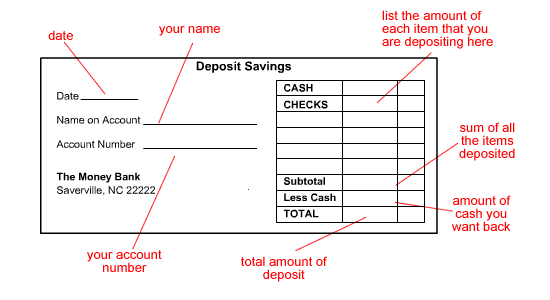
Here are the typical components of a bank deposit slip:
- Account Number: The unique number that identifies your bank account.
- Date: The date when the deposit is being made.
- Deposit Amount: The total amount of money being deposited.
- Deposit Type: Specifies if the deposit is in cash, check, or other formats like money order or Electronic Transfer.
- Deposit from Account/Credit to Account: Indicates whether the deposit is from a personal or business account, and the type of account it is credited to (checking, savings, etc.).
- Memo Section: A space for customers to write additional information about the deposit, such as the purpose or any special instructions for the bank.
Filling Out a Deposit Slip
To fill out a deposit slip correctly, follow these steps:


- Write the correct account number.
- Enter the current date.
- Specify the total deposit amount in figures and words.
- Indicate the type of deposit (cash, check, etc.).
- Specify the account from which the deposit is made and the account to which it is credited.
- Use the memo section to note any relevant details.
Types of Deposit Slips
Banks offer different types of deposit slips catering to various customer needs:
- Single Deposit Slip: Used for a single deposit transaction.
- Batch Deposit Slip: Designed for businesses to process multiple deposits at once.
- Night Deposit Slip: Allows customers to deposit funds after business hours, using secure drop boxes.
The Importance of Deposit Slips in Banking
Deposit slips are crucial to the banking process for several reasons:
1. Record Keeping: They provide a physical record of the deposit, helping customers and banks maintain accurate financial records.


2. Fraud Prevention: By requiring customers to provide detailed information about their deposit, deposit slips help deter fraudulent activities.
3. Speed and Accuracy: Well-filled-out deposit slips help bank tellers process deposits quickly and accurately, reducing waiting times for customers.
Deposit Slips and Bank Reconciliations
Deposit slips play a significant role in the process of bank reconciliations, ensuring that the customer's and the bank's records match. By comparing the deposit slips with the monthly bank statements, any discrepancies can be identified and resolved promptly.
Here's how to reconcile using deposit slips:
- Gather all deposit slips for the period in question.
- Compare the slips with the bank statement, checking for matches.
- If any differences arise, investigate and correct them.
- Once all differences have been resolved, the reconciliation process is complete.
In today's digital age, while many banks offer mobile and online deposit services, understanding the deposit slip meaning in banking remains vital. It's a fundamental aspect of banking that continues to ensure accuracy, accountability, and security in financial transactions.
When making a deposit, always double-check that your deposit slip is filled out correctly to ensure your funds get credited accurately and promptly. This small, seemingly simple step can make a significant difference in maintaining your financial well-being.
Related Articles

ANZ Deposit Slip Explained
When dealing with banking transactions in Australia, you've likely come across an ANZ deposit slip. But what exactly is it, and how do you use it? Let's...

Cra in Real Estate: Meaning & Importance Explained
In the dynamic world of real estate, acronyms often serve as shorthand for complex topics, aiding in efficient communication among industry professionals. One...
China Bank Deposit Slip Philippines: Free Sample Formats
When it comes to managing your finances, understanding bank deposit slips plays a crucial role. For those residing in the Philippines and banking with Chinese...
TD Bank Blank Checking Deposit Slips
When it comes to managing your finances, accurate and organized record-keeping is key. TD Bank, committed to providing comprehensive banking services, offers...
Bank of America: Printable Deposit Slip
Are you a Bank of America customer in need of a смep printable deposit slip? Look no further. We've got you covered with an easy-to-follow guide on obtaining...

Kalupur Bank Cheque Deposit Slip: Format & Guide
The Kalupur Bank Cheque Deposit Slip, a vital financial tool, plays a pivotal role in various banking procedures. This humble piece of paper streamlines the...