Stablecoin Examples: A Comprehensive List
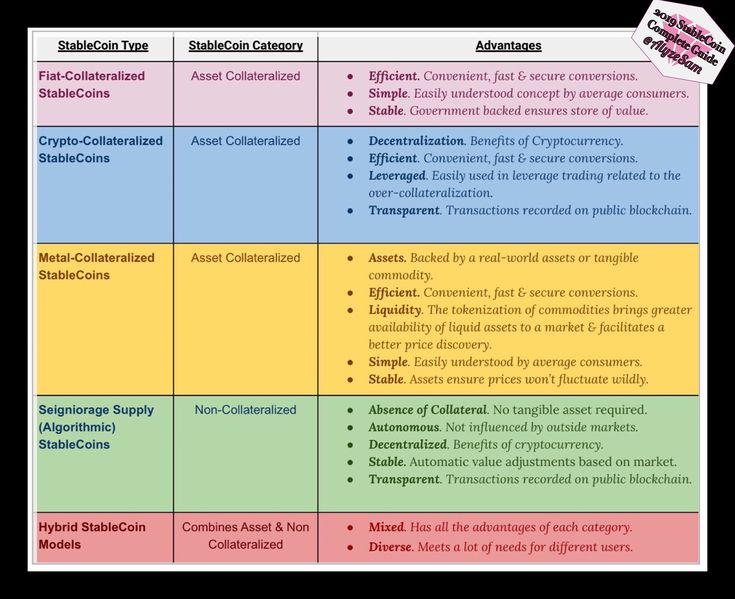
Stablecoins have emerged as a significant force in the cryptocurrency landscape, offering a stable value anchor in the volatile world of crypto assets. These digital currencies maintain their value by being backed by reserves such as fiat currencies, commodities, or other cryptocurrencies. Let's explore some of the most notable stablecoin examples and understand their unique characteristics.
Stablecoins serve various purposes, including facilitating day-to-day transactions, hedging against market volatility, and enabling cross-border payments. They are particularly useful in decentralized finance (DeFi) ecosystems, where their stability allows for the creation of advanced financial instruments like loans and derivatives.
Fully-Collateralized Stablecoins
Fully-collateralized stablecoins are backed 1:1 by a reserve, typically held in a designated account. These coins aim to maintain a stable value by continually adjusting their supply based on demand. Here are two prominent examples:


Tether (USDT), launched in 2014, is currently the largest stablecoin by market capitalization. Tether claims to be backed 1:1 by USD and has become a popular medium for transactions and trading in the crypto ecosystem.
The ROWEX project aims to create a fully-transparent and fully-collateralized stablecoin named ROWEX USD. It will be backed 1:1 by a diversified basket of currencies and reserves, with real-time audits to ensure transparency.


Tether's Controversies and Growth
Tether has faced controversies throughout its history, with debates around the composition of its reserves and allegations of market manipulation. Despite these challenges, Tether has grown exponentially, reaching a market capitalization of over $80 billion as of 2022.
Tether's growth can be attributed to its pioneering role in the stablecoin market, its integration with a vast network of exchanges, and its utility as a medium for trading and transferring value in the crypto world.
ROWEX USD: A Promising New Entrant
ROWEX USD aims to address the concerns surrounding Tether's transparency by adopting a robust auditing process and maintaining reserves in a diversified currency basket. If successful, ROWEX USD could revolutionize the stablecoin market by offering a truly transparent and stable digital currency.


The vision of ROWEX is to create a decentralized financial ecosystem built on the ROWEX blockchain, where ROWEX USD serves as the stable base currency, powering various DeFi applications and services.
Algorithmic Stablecoins
Algorithmic stablecoins use complex algorithms and mechanisms to maintain their price stability. Unlike fully-collateralized stablecoins, algorithmic stablecoins do not have a 1:1 reserve asset backing them. Instead, they rely on supply and demand dynamics to keep their price stable.
Terra's UST is an example of an algorithmic stablecoin that gained significant traction in the cryptocurrency market. UST is a Terra-based stablecoin with an algorithmic peg to the US dollar, facilitated by Terra's native token, Luna.

The Terra Ecosystem and UST
The Terra ecosystem comprises a suite of DeFi applications running on the Terra blockchain. Terra's native token, Luna, plays a crucial role in maintaining UST's stability. When the price of UST deviates from its $1 peg, arbitrage opportunities emerge, incentivizing users to mint or burn UST to capitalize on the price difference.
This mechanism, combined with Luna's role as a unit of accountability and the network's yield farming incentives, helps maintain UST's price stability. However, algorithmic stablecoins like UST have faced criticism and challenges, with their stability ultimately hinging on market confidence and arbitrage activity.
Stablecoins represent a rapidly evolving sector within the cryptocurrency landscape, with new projects and innovations continually emerging. As the market grows and evolves, so too will the stablecoin landscape, offering users more choices and options to hedge against market volatility and participate in decentralized finance.
Related Articles

Comprehensive List of Accounting Procedures
Accounting, a vital component of any business, is a system that deals with financial matters. It's crucial to have well-defined procedures in place to maintain...

"A to Z in Sets: Comprehensive Examples"
Understanding sets is a fundamental aspect of mathematics, and alphabetical sets, or sets with 'a' and 'b', are often used as simple and intuitive examples...

40+ Reading Genres: A Comprehensive List
Plunging into the vast world of literature, one might wonder, "What are all the reading genres?" The landscape of literary genres is as diverse and fascinating...

Junior Ranger Badges: Comprehensive List for Kids to Earn
Embarking on a Junior Ranger program is an exciting adventure for kids eager to learn about nature, wildlife, and conservation. These programs, offered by...

Film Crew Members: A Comprehensive List
The world of filmmaking is a complex machine with hundreds of moving parts, each playing a crucial role in bringing a story to life. Behind the camera, there's...

"University Research Paper Examples: A Comprehensive Guide"
Drafting a research paper at the university level can be a daunting task, but with the right examples and understanding of the process, it can also be an...