Dealing with Missing Data in SPSS: Efficient Imputation Techniques
Missing data is a common challenge in statistical analysis, often leading to inaccurate or biased results. SPSS, a widely-used software for data analysis, provides several methods to handle such cases. Let's explore these methods and understand how to effectively deal with missing data in SPSS.
First, it's crucial to identify why data is missing. Missing data can be classified into three categories: Missing Completely at Random (MCAR), Missing at Random (MAR), and Not Missing at Random (NMAR). Understanding the mechanism of missingness allows us to choose the appropriate technique to handle missing data.
Imputation Methods
Data imputation is a common approach to handle missing data. The goal is to replace missing values with ** estimated values.**
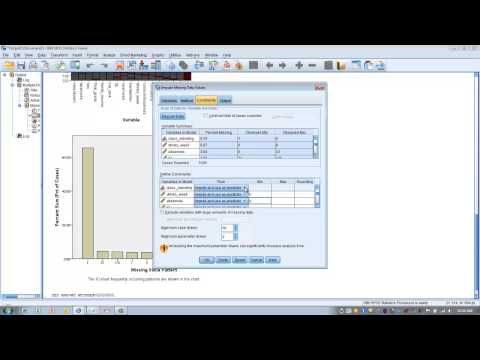


SPSS offers several imputation methods, each with its strengths and weaknesses:
Mean/Median/Mode Imputation
Mean, median, or mode imputation replaces missing values with the statistical mean, median, or mode of the available data. These methods are simple to use but can lead to biased estimates if the data is not MCAR.


Regression Imputation
Regression imputation predicts the missing values using a regression model with other variables. This method can preserve the relationship between variables but assumes that the relationship is linear and can be influenced by outliers.
Deletion Methods
Another approach to handle missing data is to delete the cases with missing values. However, this method can lead to biased results and a loss of precision if the data is not MCAR.
Listwise Deletion
Listwise deletion, also known as casewise deletion, removes all cases with missing values from the analysis. This method is simple to use but can lead to loss of data and biased results if the data is not MCAR.


Pairwise Deletion
Pairwise deletion removes cases with missing values only when the specific pair of variables is analyzed. This method preserves more data but can lead to biased results and inconsistent estimates.
Multiple Imputation
Multiple imputation is a modern and flexible approach to handle missing data. It creates multiple imputed datasets and combines the results to obtain estimates. This method can handle complex missing data mechanisms, including MAR and NMAR.
When dealing with missing data in SPSS, it's essential to consider the type of missing data, the implication of the chosen method on the analysis, and the trade-offs between bias and precision. The best approach depends on the specific context, and it's crucial to consider the assumptions and potential limitations of the chosen method.

Ultimately, handling missing data is not just about choosing a method but also understanding the data and the underlying reasons for the missingness. By following best practices and carefully considering the implications of each method, we can minimize the impact of missing data on our analyses and draw more accurate and reliable conclusions.
Related Articles

Dealing with Missing Data in Excel: Effective Solutions
Missing data in Excel can be a frustrating experience that hinders your productivity and analysis. It could be due to formatting issues, erroneous formulas, or...

Uncover Hidden Trends: Handling Missing Data Patterns in SPSS
Missing data is a common challenge in statistical analysis, and SPSS (Statistical Package for the Social Sciences) offers numerous tools to handle it...

Crime Stats Template: Track & Visualize Data with Ease
In the realm of data-driven crime analysis and prevention, understanding and presenting crime statistics in an organized and easily comprehended manner is...

Mastering Cameo 4: Effortless Cardstock Cutting Techniques
Embarking on a craft project? Chances are, you'll find yourself dealings with cardstock, and consequently, needing to cut it. While scissors and craft knives...

Master 10 Sudoku Techniques with Step-by-Step Best Practices
Sudoku, a logic-based number-placement puzzle, has become a hit worldwide due to its simplicity and intellectually stimulating nature. But it can often be...

Types of Missing Data: Understanding MCAR, MAR & MNAR
Missing data, a common challenge in data analysis, can significantly impact the reliability and validity of study results. It occurs when data is absent or...