MS Access: Connect Linked Tables Using Relative Paths
Managing databases in Microsoft Access often involves linking tables for centralized data management. One common question that arises is how to deal with relative paths when linking tables. A relative path ensures your database remains portable and avoids issues with absolute paths that point to specific network locations.
In this guide, we'll delve into the world of MS Access linked tables and discuss the importance of using relative paths. We'll also walk you through the process of creating and managing these links effectively.
Understanding Relative Paths in MS Access
Relative paths in MS Access are a way of referring to file locations without hard-coding absolute paths. Instead, they use a shorthand method that's relative to the current database's location. This makes your database more flexible and less prone to breakage when moved or shared.

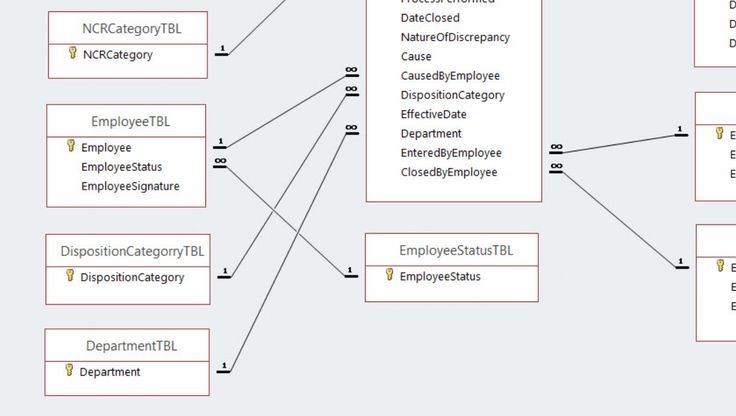

Relative paths can point to other databases, tables, or queries. They use a standard syntax that starts with a '..' for each level up the directory hierarchy and a '.' for the current level. For example, '.' represents the current database, while '..' moves up one level in the directory structure.
Benefits of Using Relative Paths
Using relative paths offers several advantages. Firstly, it makes your database more portable. You can move it to another computer or share it without fear of broken links. Secondly, it improves security by hiding the exact file locations. Lastly, it simplifies link management, as you only need to update the main database path, and all relative links adjust automatically.


Now that we've established the importance of relative paths let's explore how to create and manage them in MS Access.
Setting Up Relative Path Links
To create a relative path link, you'll need to know the relative path syntax. Here's a simple example: If your current database is 'C:\Users\John\Documents\Database1.accdb' and the table you want to link is in 'C:\Users\John\Tables\Table1.accdb', the relative path would be '..\Tables\Table1.accdb'.
rowing and managing relative path links involves a few simple steps. First, ensure that the linked database is 'Visible' in your navigation pane. Then, you can drag and drop tables or queries into your current database to link them. Access will automatically use a relative path if possible. If it uses an absolute path, you can convert it to a relative path by right-clicking on the linked object and selecting 'Linked Table Manager'. From there, you can edit the link and choose 'Make a copy of the structure of the first table or query' to create a local copy with a relative path.


Troubleshooting Relative Path Issues
Occasionally, you may encounter issues with relative paths, such as broken links. These can often be resolved by updating the database's compact and repair feature or by manually adjusting the relative path in the Linked Table Manager.
Another common issue is circular references, where a database links back to itself. This can cause problems with database size and performance. To avoid this, ensure that your relative paths don't create a circular reference.
Updating Relative Paths
When moving your database to a new location, you'll need to update the relative paths. This can usually be done automatically by using Access's 'Update Linked Server' feature. However, if this doesn't work, you may need to manipulate the paths manually using the Linked Table Manager.
It's a good practice to test your database in the new location after updating the paths to ensure all links work correctly.
In a nutshell, using relative paths in MS Access makes your databases more robust, secure, and easier to manage. It requires a bit of extra understanding and effort, but the benefits are well worth it. Happy database linking!
Related Articles
Mastering Linked Tables in MS Access with SharePoint
Integrating Microsoft Access with SharePoint can significantly enhance your organization's data management and collaboration potential. One of the key aspects...

Top 10 Wood Types for Office Tables
When it comes to choosing the perfect office table, one critical aspect that often goes overlooked is the type of wood used. While aesthetics and functionality...

Unique Wedding Table Number Ideas: Creative Ways to Guide Guests
In the whirlwind of wedding planning, there's one detail that often catches couples off guard - choosing wedding table numbers. While seating arrangements and...

MS Access VBA: Retrieve Filename from Path
In the world of Microsoft Access and VBA, handling file paths and manipulating them can be a common task. One frequent requirement is the need to extract the...

Perfectly Sized: Round Tables that Seats 6-8
When it comes to hosting gatherings, the size of your table can significantly impact the comfort and experience of your guests. A round table is an excellent...

Current MS Access Database Path: How & Where to Find It
When working with Microsoft Access, knowing your current database path is vital for navigating, managing, and securing your data. The path helps you locate...