Master Rubric for Crafting Top Poster Presentations
Picture this: you're in a bustling poster session at an academic conference. You've put in countless hours of research, design, and editing, and now it's time to showcase your work. But how do you ensure your poster is comprehendible, engaging, and deserving of that coveted 'Best Poster' title? Enter: the poster presentation rubric. This blueprint helps you create, review, and critique posters, ensuring essential elements are included and presented professionally. Let's dive into a comprehensive sample rubric to demystify the process.
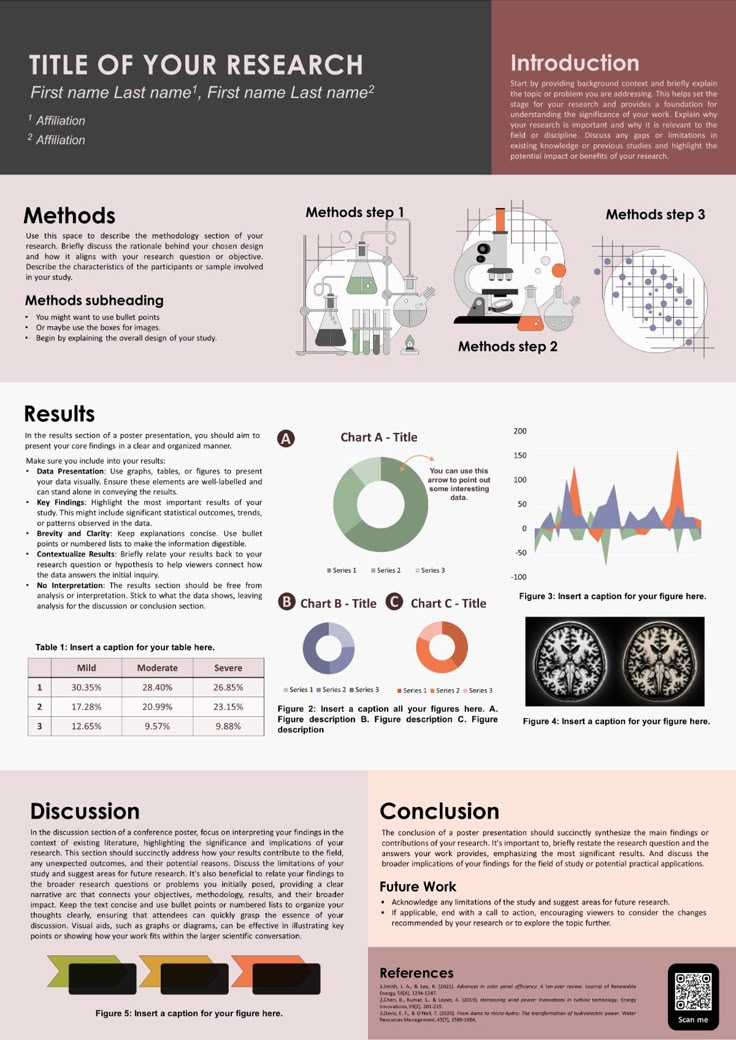
The ideal poster presentation rubric should evaluate both content and design to comprehensively assess the poster's quality. However, for this discussion, we'll focus on the content aspect, as it's the backbone of any poster presentation. With that said, let's explore the three primary content categories we'll be evaluating: Title and Introduction, Abstract and Methodology, and Results and Discussion.
Title and Introduction
First impressions matter, and your poster's title and introduction set the stage for the entire presentation. It should succinctly convey your research's purpose and grab the viewer's attention.


To excel in this category, ensure your title is:
- Clear and concise - no more than 15-20 words
- Representative of your research
- Engaging and thought-provoking
Similarly, your introduction should:


- Provide a brief background on the research topic
- Clearly state the research question or hypothesis
- Describe the significance or relevance of your study
Abstract and Methodology
Once you've hooked your audience, they'll look to your abstract for a detailed yet concise summary of your work. Here, you must communicate the purpose, methods, and key findings of your research. Keep it clear, concise, and compelling, typically within 200-300 words.
Next, your methodology section should describe:
- The population or sample studied
- The research design and data collection methods
- Any relevant ethical considerations or limitations
Results and Discussion
This is where you present your findings and their implications. To make the most of this section:


- Use tables, graphs, or other visual aids to support your text
- Avoid overwhelming viewers with too much data; highlight key trends and results
- Compare and contrast your findings with previously published research
Finally, your discussion should:
- Interpret and explain the implications of your findings
- Propose avenues for further research or application of your findings
- Acknowledge any limitations in your study's design or findings
Now, as you wrap up your poster presentation, take a moment to reflect on the journey you've undertaken. From brainstorming your research topic to designing and refining your poster, each step has contributed to your growth as a scholar. By embracing the poster creation process and using a sample rubric to guide you, you've not only created a poster, but you've also cultivated a new skill set and connection to your research. With this newfound understanding, go forth and conquer the academic poster session, and who knows? You might just walk away with that 'Best Poster' title!

Related Articles

Mastering Poster Presentations: The Ultimate Rubric
Creating an impactful poster presentation requires careful planning and effective use of visuals. A well-structured rubric can guide you through the process...
Sample Poster Rubric: Your Complete Rating Guide
Ever found yourself critiquing a poster and wished you had a clear, objective framework to guide you? A sample poster rubric might just be the perfect...
Mastering Grade 3 Presentations: Ultimate Presentation Rubric
A grade 3 presentation rubric is a critical tool that helps educators assess and provide feedback on students' presentation skills. It is designed to evaluate...

Presentation Traffic Lights: Master Your Presentations in a Flash
Do you struggle to gauge the success of your presentations? Have you found yourself repeatedly asking, "Was that enough?" or "Did they understand it?"...
Demystifying E-Poster Presentations: What is it & How to Master it
Have you ever heard of an e-poster presentation, but aren't quite sure what it is? You're not alone! In the digital age, traditional presentation methods are...

Poster vs Paper: Unveiling the Key Differences
When it comes to presenting academic or scientific work, there are two primary methods: poster presentations and paper presentations. Each has its unique...